
The Best Places to Visit in Croatia
Discover the best places to visit in Croatia, from Dubrovnik’s Old Town to Plitvice’s waterfalls plus tips on timing, routes, and trip length.
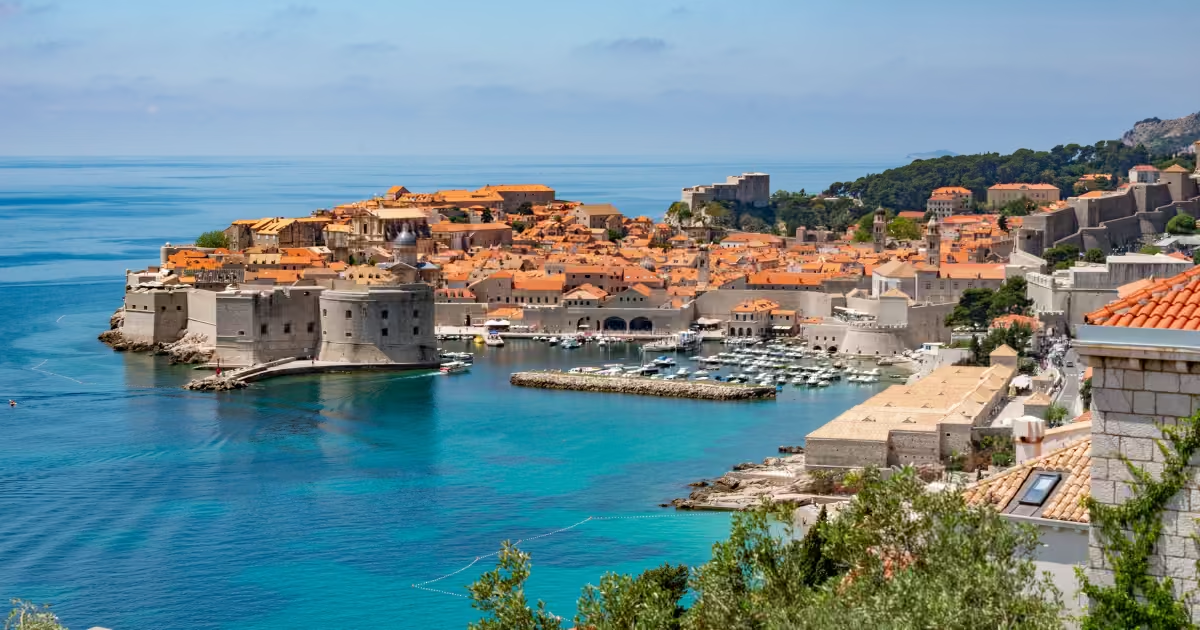
Table of Contents
Croatia sneaks up on you. You picture the Dalmatian Coast, that impossible turquoise water lapping against limestone cliffs, and figure you’ve got the gist. Then you actually get there, and it turns out the country has been quietly stacking up walled medieval towns, waterfall-laced national parks, sun-bleached islands, and a capital that feels more Vienna than Mediterranean, all packed into a coastline you could drive in a long weekend if you were in a terrible hurry (please don’t be in a hurry).
Whether you’re chasing Game of Thrones filming locations in Dubrovnik, island-hopping to Hvar’s beach clubs, or trying to figure out how many days you actually need, this guide breaks down the best places to visit in Croatia by region, by travel style, and by season. So you can build a trip that fits the version of Croatia you’re actually after.
Best Places to Visit in Croatia at a Glance
- Dubrovnik – Best for history and old towns
- Split – Best for first-time visitors
- Plitvice Lakes National Park – Best for nature
- Hvar – Best for beaches and island life
- Rovinj – Best for couples and coastal charm
- Zadar – Best for sunsets and culture
- Korčula – Best for a relaxing island escape
- Pula – Best for Roman history
- Šibenik – Best for historic coastal views
- Zagreb – Best for city breaks
Best Places to Visit in Croatia
Dubrovnik – Best for History and Old Towns
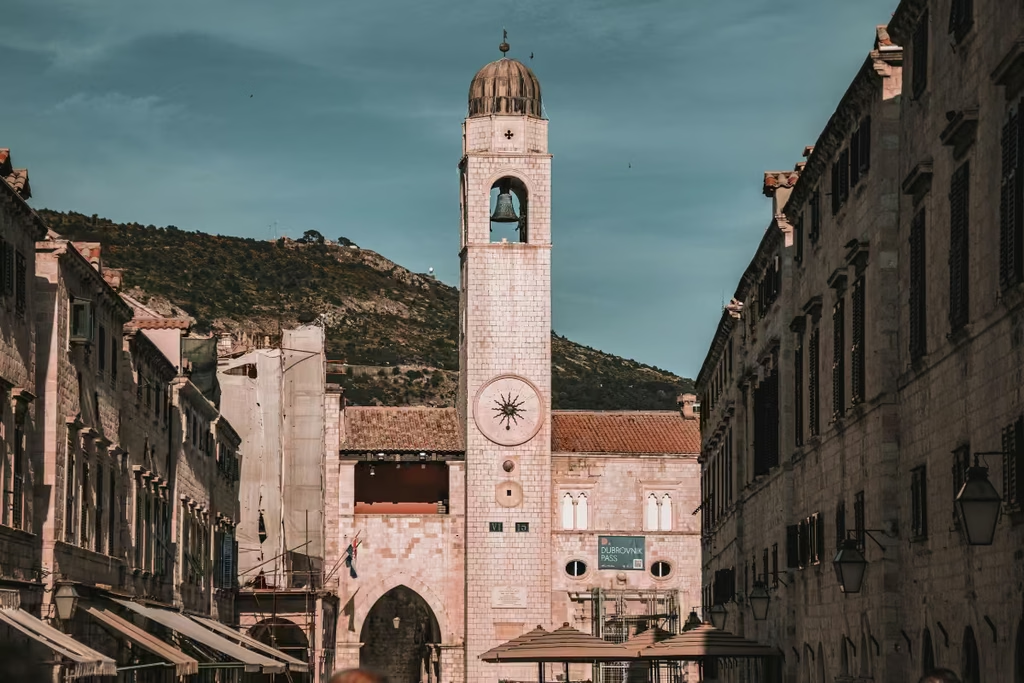
Dubrovnik’s Old Town is the postcard everyone’s seen and it still somehow outperforms the photos. Terracotta rooftops spill down toward the Adriatic inside a ring of medieval walls you can walk the entire length of in about two hours, longer if you keep stopping to stare. Stroll the marble-paved Stradun at golden hour, duck into Fort Lovrijenac for the view GoT fans will recognize instantly, and take the cable car up Mount Srđ for a sunset that puts the whole walled city in perspective. Yes, it gets crowded, especially when cruise ships are in port; arrive early or stay late to get the town to yourself.
Split – Best for First-Time Visitors
Split is where old and lived-in meet without a hint of pretense. Diocletian’s Palace, a genuine 4th-century Roman palace, isn’t roped off in a museum; it’s the city center, full of cafés, shops, and apartments tucked into ancient stone. It’s also the Dalmatian Coast’s main transport hub, with ferries fanning out to Hvar, Brač, and Korčula, which makes it the natural first stop for anyone new to Croatia. Spend a day wandering the palace basement halls and Riva waterfront promenade, then use Split as your launchpad for the islands.
Plitvice Lakes National Park – Best for Nature
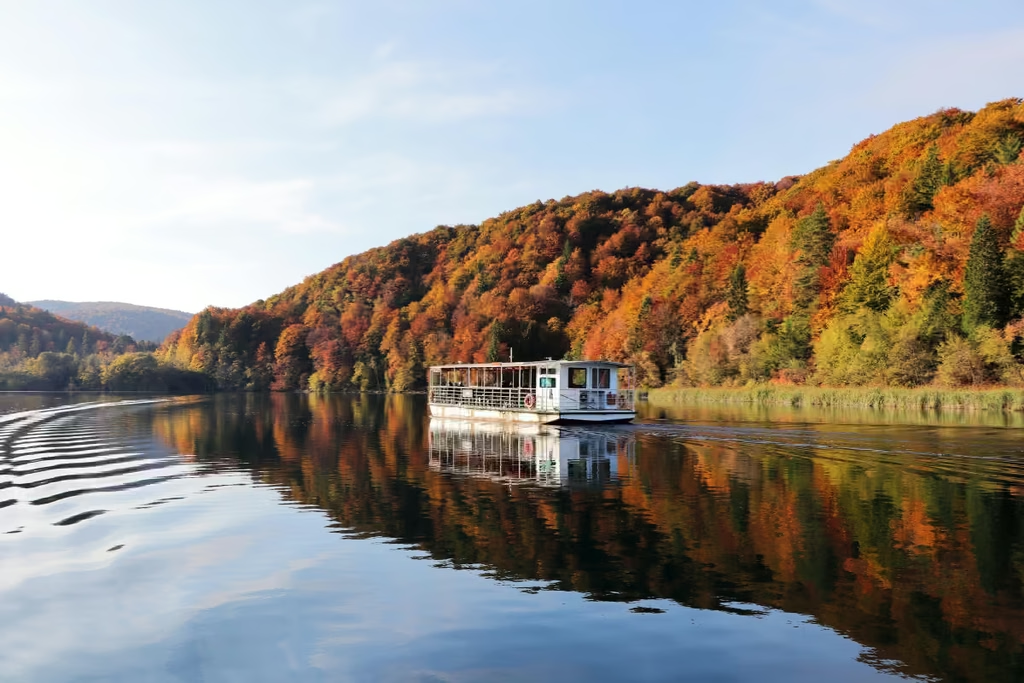
Sixteen terraced lakes connected by waterfalls, all linked by wooden boardwalks that put you right at the water’s edge. Plitvice is Croatia’s most-visited natural attraction, and it earns it. The colors shift with the light and season, from deep emerald to pale turquoise, and the sound of falling water follows you the entire hike. It sits inland, roughly halfway between Zagreb and Zadar, so it pairs naturally with either as a road-trip stop. Plan for at least half a day, and go in shoulder season if you can; summer crowds on the boardwalks can slow the pace to a shuffle.
Hvar – Best for Beaches and Island Life
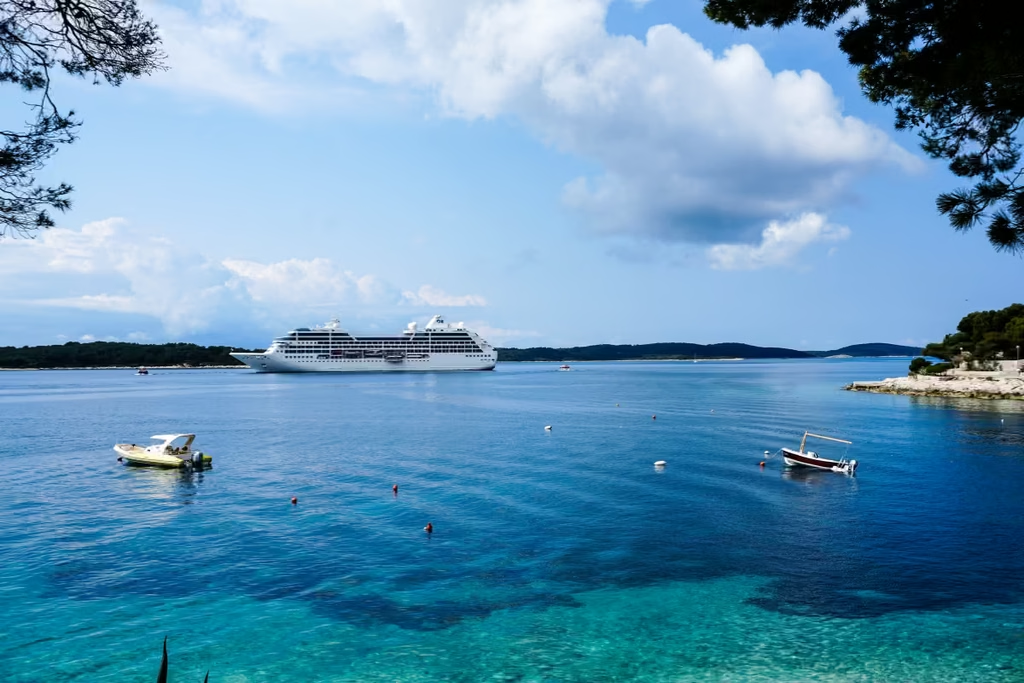
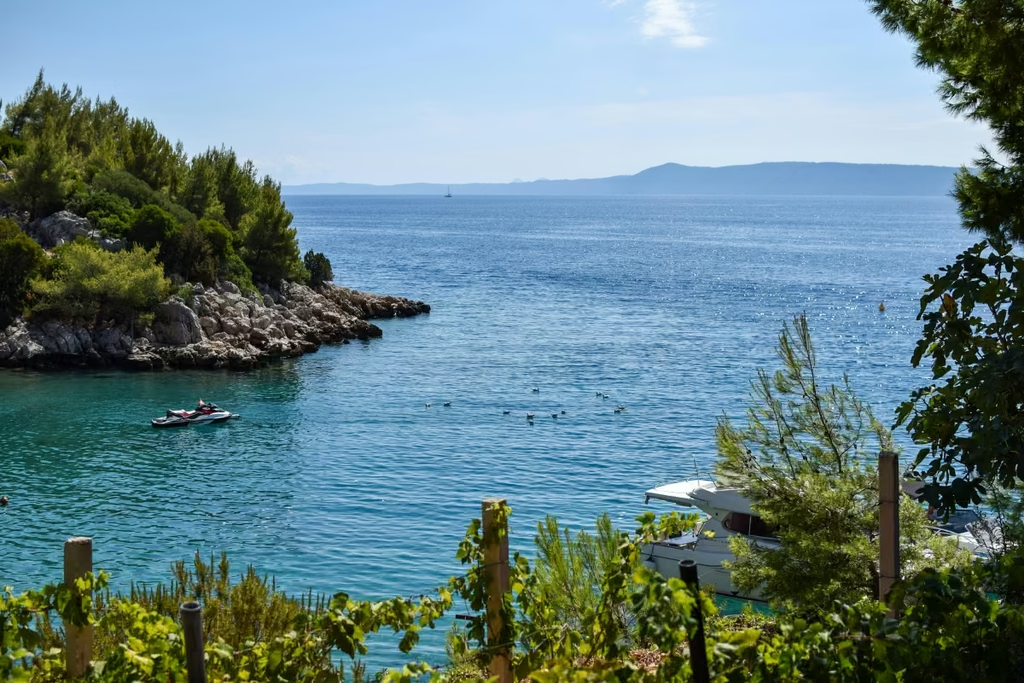
Hvar has a split personality, and that’s exactly its appeal. Hvar Town is a glamorous and a little loud yacht-lined harbor, rooftop bars, and a hilltop fortress glowing at night. Head just outside town, though, and you hit lavender fields, quiet coves, and the Pakleni Islands, a short boat ride away and full of the kind of swim-up beach bars that make you lose track of the afternoon. It’s the best base in Croatia if your trip is built around beach days and nightlife in equal measure.
Rovinj – Best for Couples and Coastal Charm
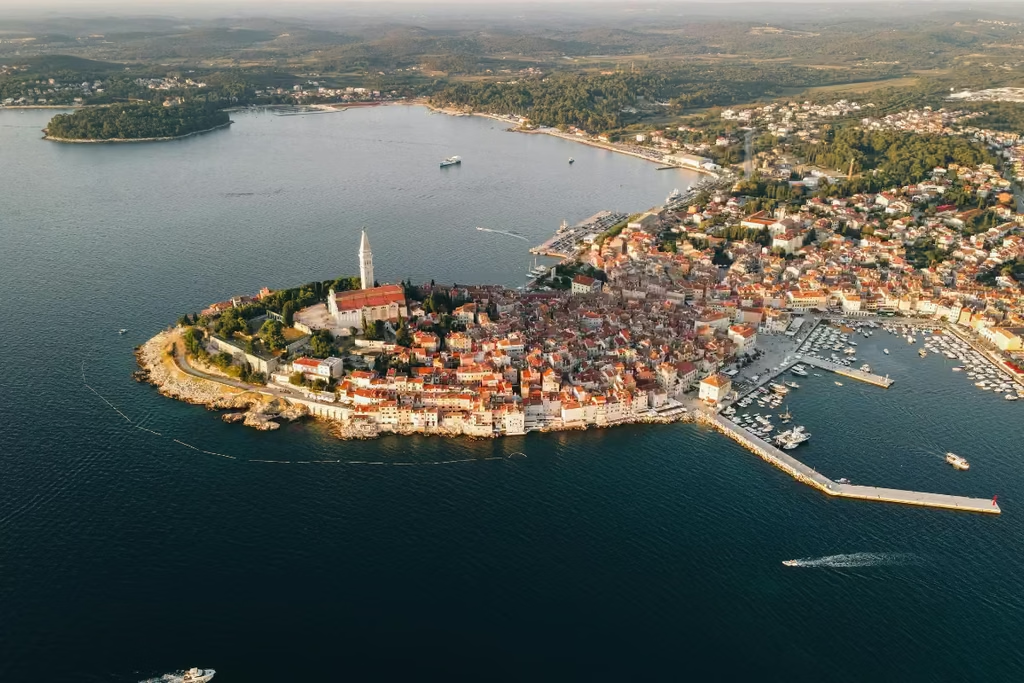
Rovinj looks like Croatia borrowed a page from Venice and improved on it. Pastel houses stack up a hillside toward the Church of St. Euphemia, cobblestone lanes twist down to a working harbor, and the whole town feels built for slow mornings and long dinners. It sits up in Istria, Croatia’s food-and-wine peninsula, so pair a Rovinj stay with truffle dishes, local olive oil, and a glass of Malvazija at a konoba overlooking the water. Quieter and more intimate than the Dalmatian hotspots, it’s the pick for a romantic stretch of the trip.
Zadar – Best for Sunsets and Culture
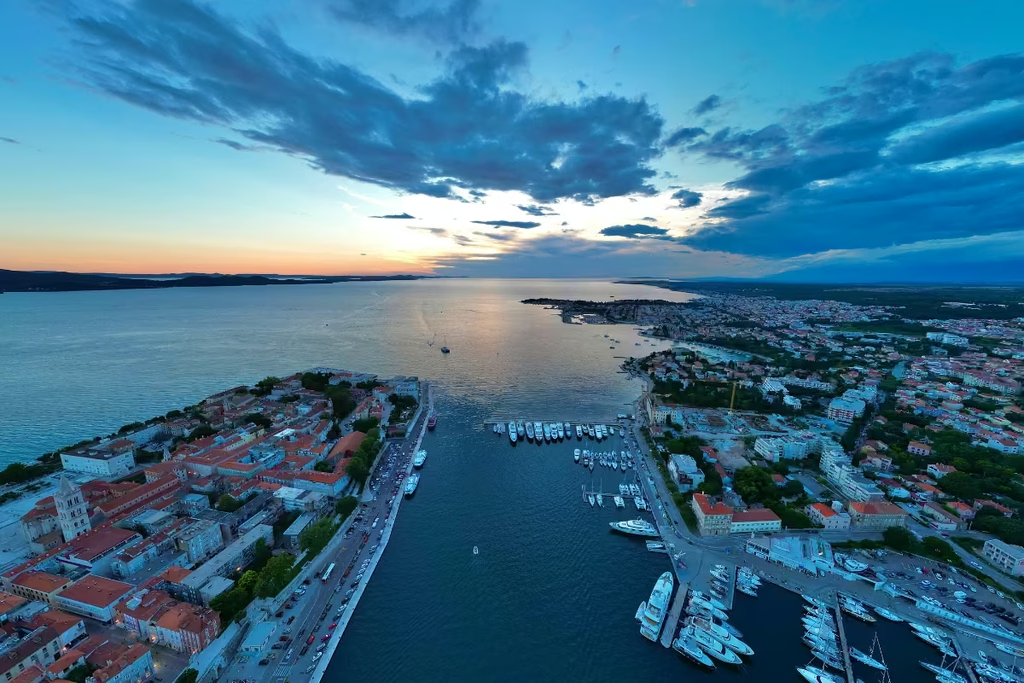
Alfred Hitchcock reportedly called Zadar’s sunset the most beautiful he’d ever seen, and the city built a monument around agreeing with him: the Sea Organ, where waves push air through pipes under the pavement to produce actual music, sits right beside the Sun Salutation, a circle of solar panels that lights up after dark. Beyond the gimmicks, Zadar’s Old Town holds Roman ruins and a 9th-century church, making it a rare combination of ancient history and genuinely inventive modern art. It’s also a handy base for day trips to the Kornati Islands.
Korčula – Best for a Relaxing Island Escape
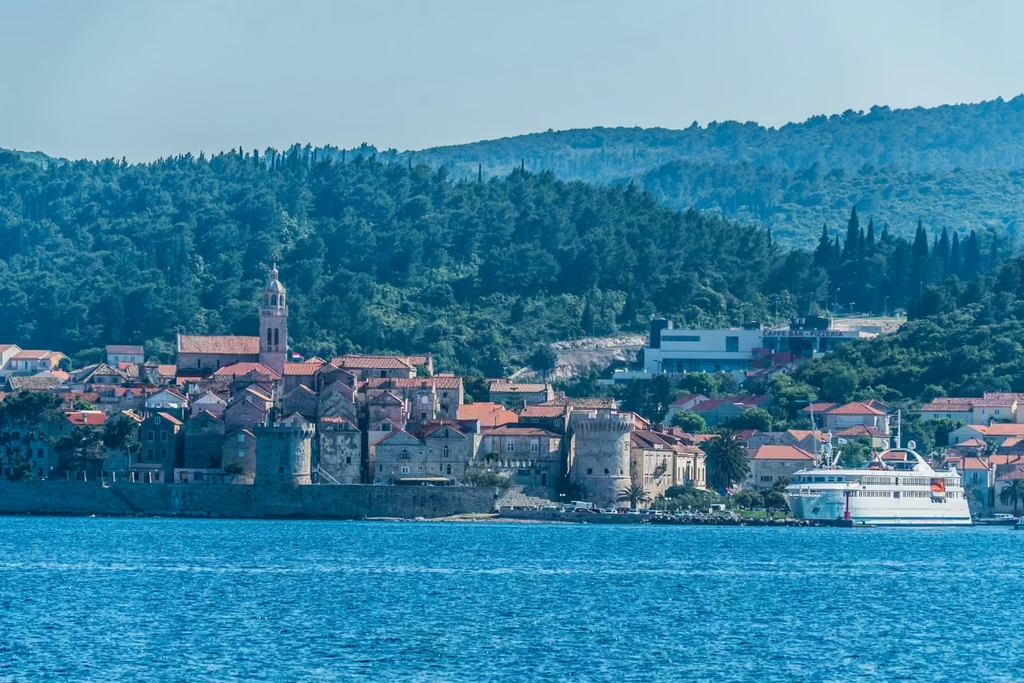
Korčula Town has the fortified old-town, red-roof, marble-street look of Dubrovnik at a fraction of the crowd size, all set on a green island known for its wine. Locals claim it’s the birthplace of Marco Polo; take that with a grain of salt, but visit the small museum dedicated to the claim anyway. This is the island to pick when you want the charm of Dubrovnik without the lines, plus vineyards, olive groves, and beaches that don’t require booking a lounger a week in advance.
Pula – Best for Roman History
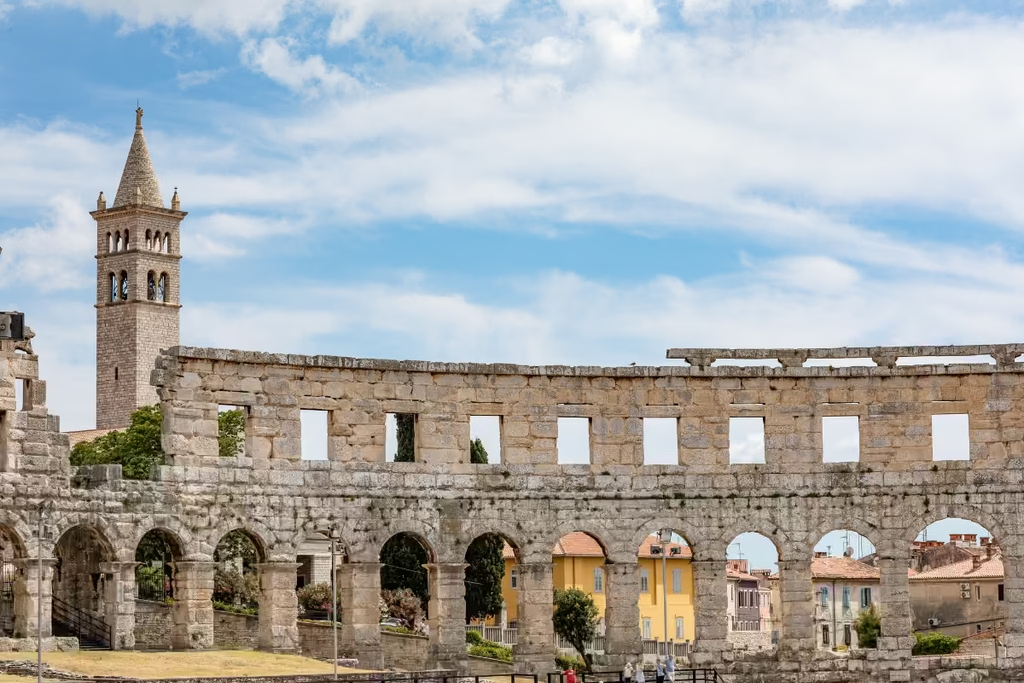
Pula’s Roman amphitheater is one of the best-preserved in the world- the sixth-largest of its kind, still standing nearly intact, and still hosting concerts and film screenings under the stars. Wander further and Istria’s biggest city keeps unpacking Roman relics: a triumphal arch, a well-preserved forum, and even underground tunnels beneath the arena. It’s less polished than Dubrovnik or Split, which is part of the appeal; history here feels stumbled upon rather than staged.
Šibenik – Best for Historic Coastal Views
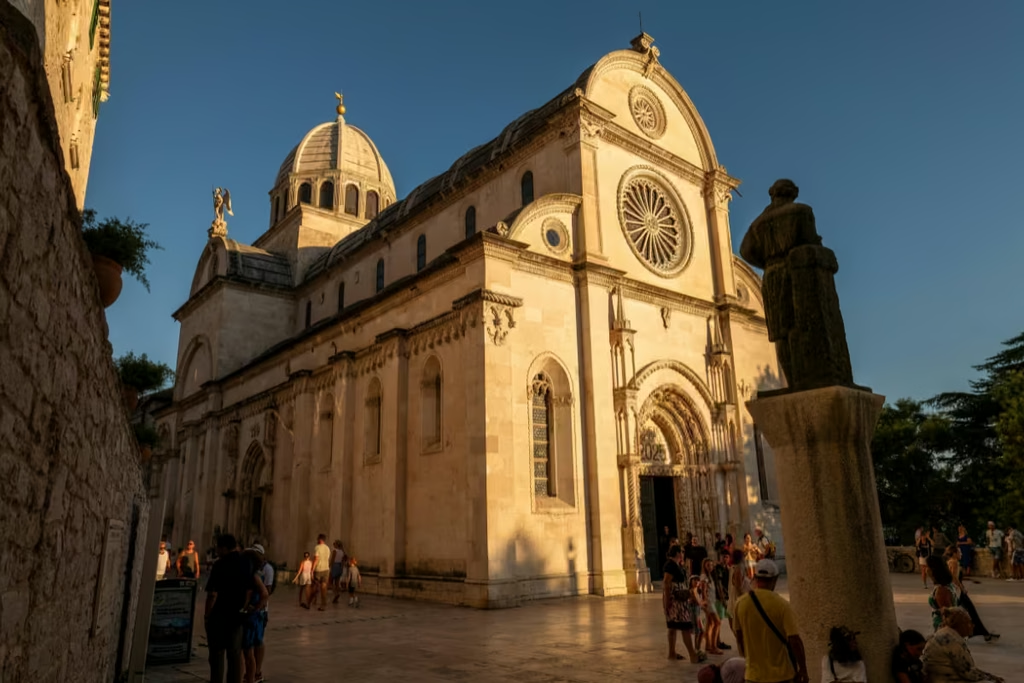
Šibenik doesn’t get the attention Split or Dubrovnik does, and that’s precisely why it’s worth the detour. St. James Cathedral, a UNESCO World Heritage Site built entirely of stone without brick or wood binding, anchors a warren of steep alleys and four hilltop fortresses with sweeping views over the Adriatic. It’s also the gateway to Krka National Park, home to waterfalls you’re actually allowed to swim beneath, a rarer treat since swimming was restricted at Plitvice.
Zagreb – Best for City Breaks
Croatia’s capital sits inland and feels like a different country from the coast more Central European, with grand Austro-Hungarian architecture, a lively café culture, and a genuinely quirky sense of humor (see: the Museum of Broken Relationships). Explore the Upper Town’s cobbled streets and funicular, then drop into the Lower Town for green squares and a buzzing street-market scene at Dolac. Zagreb rarely makes it onto a beach-focused itinerary, but it’s an ideal one- or two-night bookend at the start or end of a trip.
Best Places to Visit in Croatia by Travel Style
Best Places to Visit in Croatia for Beaches
Hvar and its Pakleni Islands lead the pack for beach clubs and clear water, while Korčula and Brač (home to the famous Zlatni Rat “horn” beach) offer a quieter, less party-driven version of the same coastline.
Best Places to Visit in Croatia for Couples
Rovinj’s slow pace and Istrian food scene make it the easy pick for romance, with Korčula’s vineyards and Šibenik’s fortress sunsets as strong runners-up.
Best Places to Visit in Croatia for Families
Split’s easy ferry connections and walkable old town, plus Krka National Park’s swimmable waterfalls, make this pairing especially forgiving for families traveling with kids.
Best Places to Visit in Croatia for History and Culture
Dubrovnik and Split cover the medieval and Roman bases, Pula goes deeper on ancient Rome, and Zagreb rounds it out with a distinctly Central European chapter of Croatian history.
Best Places to Visit in Croatia for Nature
Plitvice Lakes National Park is the headline act, with Krka National Park (near Šibenik) offering a swimmable alternative and the Kornati Islands archipelago rewarding anyone willing to take a boat out from Zadar.
Best Time to Visit the Best Places in Croatia
Late spring (May–June) and early fall (September–October) hit the sweet spot: warm enough to swim, mild enough to hike Plitvice comfortably, and noticeably lighter on crowds and prices than peak summer. July and August bring the warmest water and the busiest ferries, harbors, and old towns; book accommodations well ahead if you’re traveling then. Winter is quiet almost everywhere except Zagreb, which leans into its Christmas market scene from late November through early January.
How to Get Around the Best Places in Croatia
Ferries are the backbone of any island-hopping route, connecting Split, Hvar, Korčula, and Brač with frequent seasonal service (Jadrolinija is the main operator). For the mainland coast, driving gives you the most flexibility; the coastal road between Split and Dubrovnik is genuinely one of Europe’s great drives, though bus service between major towns is reliable and comfortable if you’d rather skip the rental car. Zagreb and Plitvice are best reached by car or bus from the coast, since they sit inland and off the ferry network entirely.
How Many Days Do You Need to Visit Croatia?
Ten to fourteen days lets you comfortably combine Zagreb, Plitvice, and the Dalmatian Coast without feeling rushed. If you’re short on time, one week is enough to cover Split, Hvar, and Dubrovnik as a focused coastal trip. For a deeper dive into just the islands, or to add Istria’s Rovinj and Pula into the mix, budget closer to two to three weeks.
Best Places to Visit in Croatia FAQs
What is the best place to visit in Croatia for the first time?
Split is the best starting point for first-time visitors; it’s a major ferry hub, has an easily walkable old town built inside a Roman palace, and connects easily to both Dubrovnik and the islands.
What is the most beautiful place to visit in Croatia?
Plitvice Lakes National Park is consistently named Croatia’s most beautiful spot for its terraced waterfalls and turquoise lakes, though Dubrovnik’s Old Town and Rovinj’s harbor are close contenders for most photogenic town.
What are the best places to visit in Croatia for beaches?
Hvar and its surrounding Pakleni Islands are the top beach destination, with Brač’s Zlatni Rat beach and the island of Korčula offering excellent, quieter alternatives.
How many days do you need to visit Croatia?
Plan for at least seven days to cover the coastal highlights, and ten to fourteen days if you want to add Zagreb and Plitvice Lakes National Park without rushing.