
The Best Places To Visit In China
Discover the best places to visit in China, from Beijing and Xi’an to Chengdu, Guilin, Zhangjiajie, Shanghai, Yunnan, and Hangzhou.
Table of Contents
China is the kind of destination that can make one trip feel like several. Imperial palaces, ancient Buddhist caves, neon-lit skylines, misty karst peaks, tea country, spicy food capitals, and high-speed rail journeys all belong to the same country. The challenge is deciding where to begin, because the best places to visit in China are spread across an enormous and wonderfully varied landscape.
For a first trip, I’d combine one historic city, one modern city, and one nature-focused destination rather than trying to tick off every famous stop. Beijing and Xi’an give you a strong introduction to China’s history, Shanghai shows its contemporary energy, and Chengdu, Guilin, Zhangjiajie, or Yunnan can add food, wildlife, or landscapes. I’d also leave room for slower days. China is much more rewarding when you step away from a checklist and spend time in a neighborhood, market, teahouse, or small town.
Best Places to Visit in China
The best places to visit in China include Beijing for imperial history, Xi’an for ancient heritage, Shanghai for modern city life, Chengdu for food and pandas, Guilin and Yangshuo for karst scenery, Zhangjiajie for dramatic mountains, and Yunnan for culture and slower travel.
- Beijing – Best for imperial history and major landmarks
- Xi’an – Best for ancient history and the Terracotta Army
- Shanghai – Best for contemporary culture, food, and city energy
- Chengdu – Best for Sichuan food, teahouses, and giant pandas
- Guilin and Yangshuo – Best for rivers, karst peaks, and cycling
- Zhangjiajie – Best for sandstone mountains and outdoor scenery
- Hangzhou – Best for West Lake, tea culture, and a gentler city break
- Yunnan – Best for mountain towns, minority cultures, and varied landscapes
Beijing: Best for Imperial History and First-Time Visitors
Beijing is the strongest starting point for travelers who want to understand China’s imperial past. The Forbidden City, Tiananmen Square, the Temple of Heaven, and the Summer Palace give the capital an extraordinary concentration of historic landmarks, but the city becomes more interesting when you move beyond the grand monuments.
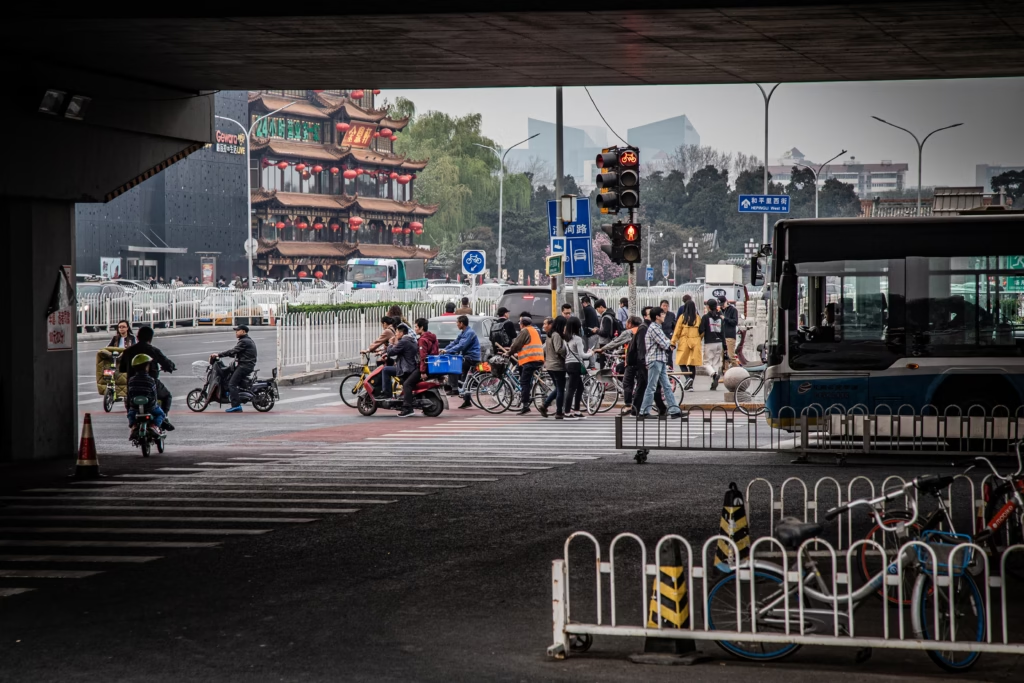
I’d set aside time for Beijing’s hutongs, the old residential lanes where courtyard homes, small restaurants, neighborhood shops, and local life offer a more intimate view of the city. Try wandering without a strict plan, stopping for noodles or dumplings when something catches your eye. The Great Wall is the obvious day trip, but choose a section carefully and check current access information before you go, since conditions and transport arrangements can change.
Beijing is busy and spread out, so it rewards thoughtful planning. Group nearby sights together, wear comfortable shoes, and don’t underestimate the time needed to cross the city. If this is your first visit to China, Beijing gives you the clearest sense of the country’s scale, history, and ambition.
Xi’an: Best for Ancient History and the Terracotta Army
Xi’an is one of the best places to visit in China for travelers drawn to archaeology and ancient trade routes. The city was the eastern starting point of the Silk Road and served as the capital of several dynasties, leaving behind a layered historic identity that still shapes the modern city.
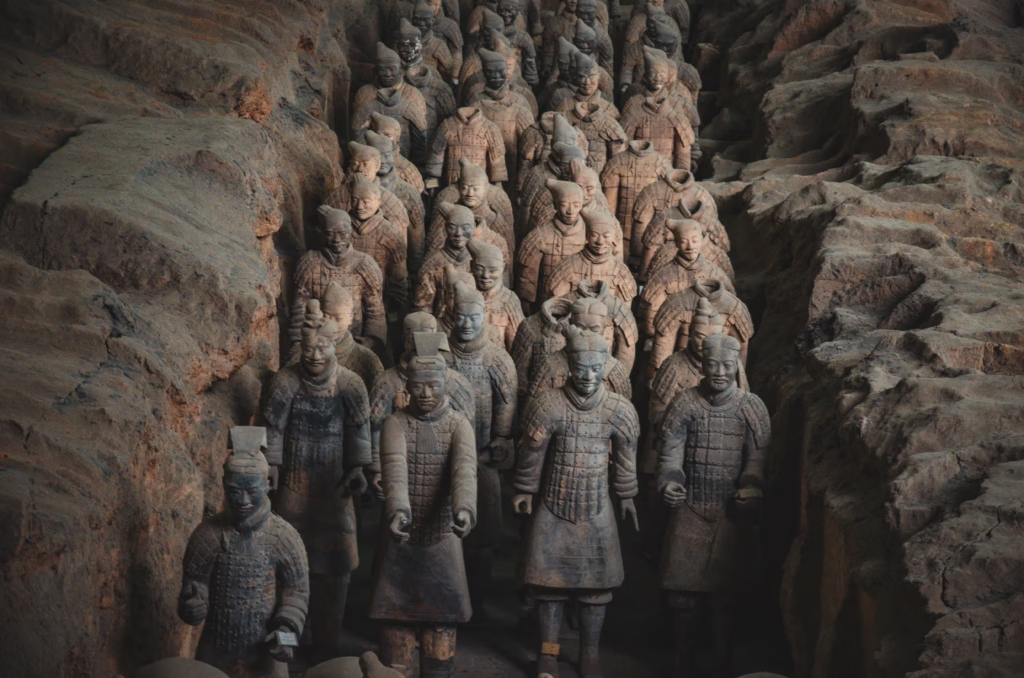
The Terracotta Army is the headline attraction, and it deserves the attention it receives. Thousands of life-size figures were created to guard the tomb of Qin Shi Huang, China’s first emperor. The scale of the excavated pits is difficult to grasp from photographs, so I’d plan enough time to see the site without rushing from one hall to the next.
Back in the city, the ancient walls are a memorable way to get your bearings, while the Muslim Quarter brings together food stalls, bakeries, noodles, grilled skewers, and a lively evening atmosphere. Xi’an’s food is reason enough to stay longer than a quick Terracotta Army stop. Look for biangbiang noodles, roujiamo, and lamb dishes, and be curious about the regional flavors rather than expecting every Chinese meal to resemble food you know at home.
Shanghai: Best for Modern China, Food, and City Breaks
Shanghai is the best choice for travelers who want China’s modern side, with a dramatic skyline, historic neighborhoods, international influences, and one of the country’s broadest food scenes. The Bund remains the classic introduction: colonial-era buildings on one side of the river and the futuristic Pudong skyline on the other.

What I like about Shanghai as a base is the contrast between its scale and its small details. You can spend one day around major landmarks and museums, then devote the next to leafy former concession streets, independent cafés, local markets, or traditional gardens. Yu Garden is a popular stop, while neighborhoods such as the Former French Concession are better explored slowly, with time to look up at old apartment buildings and duck into side streets.
Shanghai also works well for independent travelers. Public transport covers much of the city, there’s an enormous range of accommodation, and the mix of locals, students, visitors, and international residents makes it easier to find social spaces. It’s not the place I’d choose for quiet countryside, but it’s excellent for a first taste of contemporary Chinese culture.
Chengdu: Best for Food, Teahouses, and Giant Pandas
Chengdu is one of the best places to visit in China for travelers who organize their trips around food. The capital of Sichuan is famous for its bold flavors, especially the combination of chili heat and numbing Sichuan pepper, but the city’s appeal is broader than its cuisine.

A giant panda munching bamboo, enjoying a playful moment in Chengdu Zoo, China.
Spend time in a local teahouse, where the pace is often slower than in China’s major business centers. People come to talk, play mahjong, read, and watch the day unfold. Chengdu’s relaxed public life makes it a particularly good city for solo travelers who want to be around people without needing a packed sightseeing schedule.
The Chengdu Research Base of Giant Panda Breeding is the city’s most famous attraction, and an early start is sensible because pandas are generally more active during cooler parts of the day. Check the latest visitor guidance before traveling, and remember that responsible wildlife tourism means following barriers and staff instructions rather than trying to get closer for a photograph.
Chengdu also makes a useful base for exploring Sichuan beyond the city. If you have extra days, look into mountain landscapes, historic towns, and Buddhist sites in the wider region rather than treating Chengdu as only a food stop.
Guilin and Yangshuo: Best for River Landscapes and a Slower Pace
Guilin and Yangshuo are among the best places to visit in China for travelers who want dramatic scenery without giving up comfortable access to restaurants, guesthouses, and outdoor activities. The Li River landscape is defined by steep karst peaks rising from green water and farmland, a setting that has influenced Chinese painting and poetry for centuries.
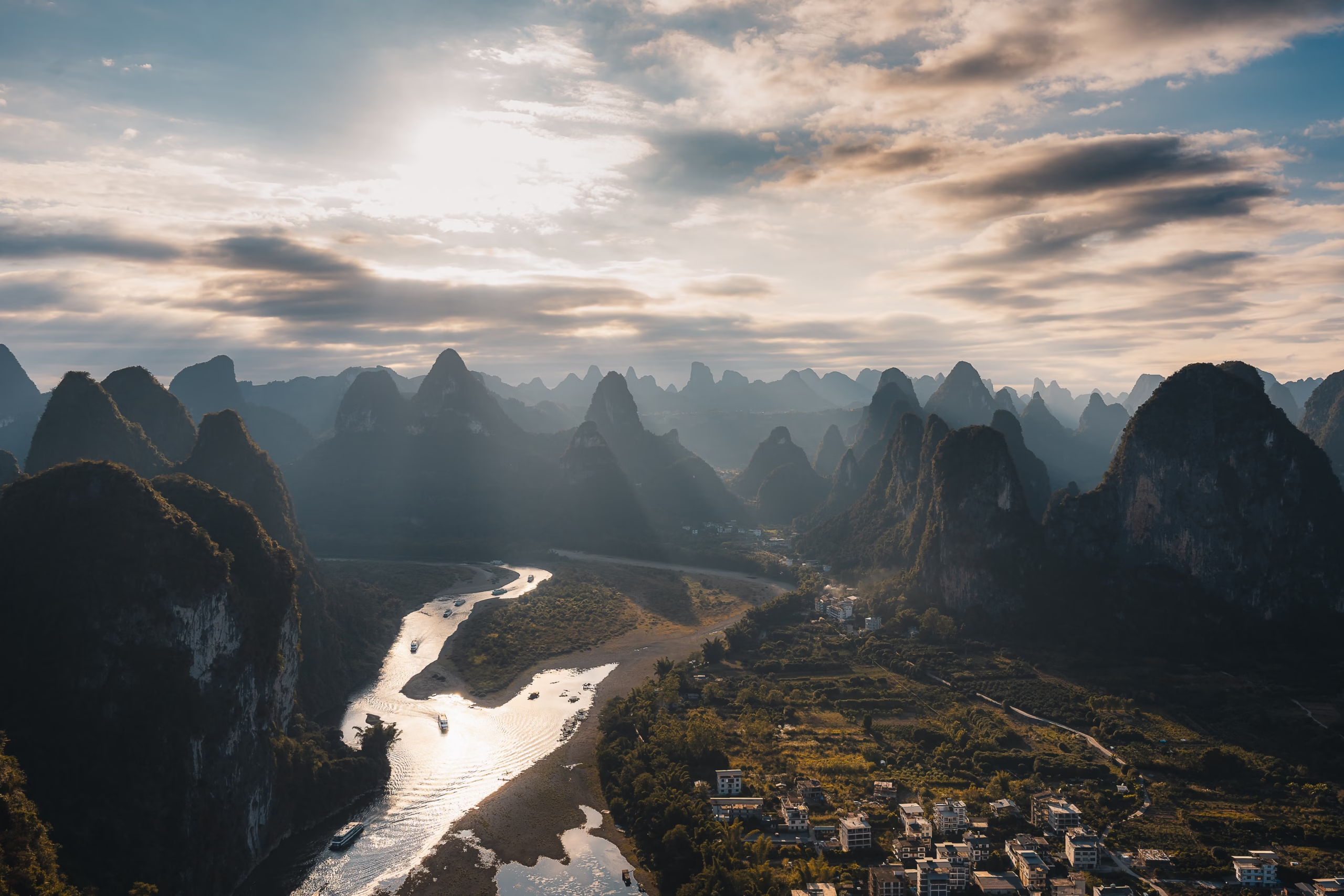
Guilin is the practical gateway, while Yangshuo usually offers the more relaxed experience. A river journey is the classic way to see the landscape, but I’d avoid building the entire visit around one organized excursion. Cycling through the countryside, walking along village roads, or joining a small-group activity can help you experience the area at a gentler pace.
Yangshuo has become popular, so the busiest streets can feel commercial during peak periods. That doesn’t mean you need to skip it. Stay a little outside the most crowded center, explore early in the day, and use the town as a base for quieter routes. This region suits travelers who want scenery, photography, and a break from large-city intensity.
Zhangjiajie: Best for Dramatic Mountains and Outdoor Adventure
Zhangjiajie is the destination to choose when you want towering sandstone pillars, forested valleys, and mountain viewpoints that feel unlike anywhere else in China. The wider area includes Zhangjiajie National Forest Park and the scenery around Tianmen Mountain, giving outdoor-focused travelers plenty to work with.
The landscapes are spectacular, but the experience can involve crowds, stairs, cable cars, and weather that changes quickly in the mountains. I’d build flexibility into the itinerary rather than assuming every viewpoint will be clear. Mist can hide the peaks one hour and reveal them the next, so an imperfect weather day isn’t automatically a wasted one.
Wear shoes with dependable grip and carry water, especially if you plan to walk rather than rely on the main transport systems. Zhangjiajie is a strong choice for active travelers, but it may be less suitable if you want flat, easy sightseeing or dislike heights. Add it to a wider Hunan itinerary if you’re interested in spicy food and regional culture as well as scenery.
More Places to Add to a China Itinerary
China’s most rewarding destinations aren’t limited to the usual first-trip route, and adding one less obvious stop can make your itinerary feel much more personal.
Hangzhou: Best for West Lake and Tea Culture
Hangzhou is an easy choice for travelers who want a beautiful, manageable city break built around gardens, water, and tea culture. West Lake is the centerpiece, with causeways, bridges, pavilions, and shoreline paths that invite a slow day rather than a frantic tour.
The city is also associated with Longjing tea, and visiting tea-growing areas outside the urban center adds a rural dimension to the trip. Hangzhou can be paired naturally with Shanghai, but I’d avoid treating it as just a quick side trip if you enjoy walking, photography, and calm landscapes.
Yunnan: Best for Mountain Towns and Cultural Variety
Yunnan is one of China’s most rewarding regions for travelers who want a change of pace. The province includes highland landscapes, old towns, lakes, tea-growing areas, and communities with distinct local traditions. Kunming works as a practical starting point, while places such as Dali, Lijiang, and Shangri-La appeal to travelers looking for mountains and a slower rhythm.
Yunnan is better suited to travelers with time and curiosity than to anyone trying to rush through a short checklist. Spend time walking old streets, taking local transport, visiting markets, and learning how different communities shape the food and architecture of the region. Conditions vary considerably across the province, so research each stop separately before committing to a route.
Huangshan: Best for Mountain Walks and Classic Chinese Landscapes
Huangshan, or the Yellow Mountains, is a strong pick for travelers who want mountain scenery with a deep connection to Chinese art and literature. Granite peaks, pine trees, ridgelines, and shifting cloud create the kind of landscape that appears repeatedly in traditional paintings.
It’s a hiking destination, although you don’t need to be an extreme trekker to enjoy it. Expect stairs and uneven terrain, and plan around weather rather than assuming every famous view will be visible. The nearby villages of Hongcun and Xidi can add historic architecture and a quieter cultural counterpoint to the mountain trails.
Best Places to Visit in China by Travel Style
The best destination depends on the kind of trip you want, so I’d choose your travel style before choosing every stop on the map.
- For first-time visitors: Combine Beijing, Xi’an, and Shanghai. This route gives you imperial history, ancient archaeology, and modern city life.
- For food: Choose Chengdu, Xi’an, Guangzhou, or Shanghai. Regional cuisine is one of the strongest reasons to travel through China slowly.
- For nature: Look at Guilin and Yangshuo, Zhangjiajie, Huangshan, or Yunnan.
- For solo travel: Shanghai, Beijing, Chengdu, and Hangzhou offer plenty of independent sightseeing and social possibilities.
- For history: Beijing and Xi’an are the essential choices, with Luoyang, Datong, and Pingyao worth considering for a deeper route.
- For a slower trip: Yangshuo, Hangzhou, Dali, and smaller Yunnan towns allow more unstructured days.
- For a city break: Shanghai is the easiest choice for modern energy, while Beijing suits travelers who want major historic sights.
If you’re comparing China with other large, varied countries, our guides to the best places to visit in Australia and the best places to visit in Morocco are useful reminders that the right itinerary depends as much on distance and travel style as on famous sights.
How to Plan a China Trip
The smartest way to plan China is to build around regions rather than trying to connect every famous destination. Beijing, Xi’an, and Shanghai form one strong first-trip framework, while Chengdu and Guilin can be added if you have more time. Zhangjiajie and Yunnan are better treated as dedicated regions because adding them without enough days can leave you spending too much of the trip in transit.
China’s rail network makes overland travel between many major cities practical, while flights can help with longer regional jumps. For either option, check current schedules, booking rules, station details, and local requirements before departure. Transport systems can be efficient but large, and major stations may be far from the city center.
I’d also download translation tools, save accommodation details in Chinese characters, carry a small amount of backup cash, and keep plans flexible. Digital payments are widely used, but international travelers may need to prepare apps and accounts in advance. Internet access and app availability can differ from what you’re used to, so don’t rely on one digital tool for maps, bookings, and communication.
When to Visit the Best Places in China
Spring and autumn are generally the easiest seasons for a broad China itinerary, especially if you want comfortable conditions for city walking and mountain scenery. Summer can work well for northern destinations and highland areas, but heat, humidity, rain, and domestic travel demand may affect plans. Winter brings cold conditions in the north while southern cities can be milder, making it a better season for travelers who are happy to focus their route geographically.
National holidays can bring major domestic travel crowds, so check the calendar for the year of your visit before finalizing transport and accommodation. Weather also varies dramatically between Beijing, Shanghai, Chengdu, Guilin, and Yunnan. A useful planning habit is to look at each destination separately rather than choosing one season for the whole country.
If your dates are flexible, our guide to the best places to visit in November can help you compare China with other destinations for an autumn trip. You might also enjoy the seasonal ideas in the best places to visit in Spain if you’re deciding between a long-haul adventure and a shorter European journey.
How Many Days Do You Need in China?
You can experience one Chinese city in four or five days, but a broader first trip deserves at least ten days. With that amount of time, I’d choose Beijing, Xi’an, and Shanghai, adding Chengdu or Guilin only if the transport connections and pace make sense.
- Five days: Focus on Beijing or Shanghai, with one carefully chosen day trip.
- Seven days: Choose Beijing and Xi’an, or Shanghai and Hangzhou, rather than trying to cross the whole country.
- Ten days: Combine Beijing, Xi’an, and Shanghai for a balanced first introduction.
- Fourteen days: Add Chengdu, Guilin and Yangshuo, or another regional destination based on your interests.
- Three weeks or more: Build a route around two or three regions and include slower stops such as Yunnan or Huangshan.
The best China itinerary isn’t the one with the most pins on a map. It’s the one that gives you enough time to recover from travel days, eat without rushing, get lost in a neighborhood, and leave room for the unexpected.
China Travel FAQs
What is the best place to visit in China for the first time?
Beijing is the strongest first stop for most travelers because it combines major historic landmarks, traditional neighborhoods, museums, and access to the Great Wall. Pairing it with Xi’an and Shanghai creates a well-rounded first trip.
What are the most beautiful places to visit in China?
Guilin and Yangshuo, Zhangjiajie, Huangshan, and Yunnan are among the strongest choices for dramatic natural scenery. Beauty in China is wonderfully varied, from karst rivers to high mountain landscapes and quiet lakeside towns.
Is China good for solo travelers?
Yes, especially if you’re comfortable with some preparation. Major cities offer extensive transport, hostels and hotels, and many ways to meet other travelers. Translation tools, saved addresses, and flexible planning make independent travel much easier.
What is the best route for a first trip to China?
A classic route is Beijing, Xi’an, and Shanghai. With extra time, add Chengdu for food and pandas or Guilin and Yangshuo for river landscapes. I’d avoid adding several remote regions unless you have at least two weeks.
Is China expensive for budget travelers?
China can suit different budgets, but costs vary by city, accommodation type, transport choices, and activities. Budget travelers can look at guesthouses, local restaurants, public transport, and slower overland routes while reserving more of the budget for major attractions and longer-distance travel.
What should I eat in China?
Eat regionally whenever possible. Try Sichuan dishes in Chengdu, Xi’an’s noodles and lamb specialties, Shanghainese cuisine in Shanghai, Cantonese food in southern China, and local snacks wherever you travel. Ask locals or accommodation staff where they eat, and follow busy restaurants with a strong turnover.
What should I do next?
Choose the experience you’re most excited about, whether that’s walking the Great Wall, eating through Chengdu, seeing the Terracotta Army, or cycling among Yangshuo’s peaks. Then build the rest of your route around it, leaving enough space for China’s cities and landscapes to surprise you.