
The Best Places to Visit in Iceland
The best places to visit in Iceland, from Reykjavík to the Westfjords, a full guide to Iceland’s top natural wonders and travel destinations.

Table of Contents
Iceland has a way of making you recalibrate what “dramatic scenery” even means. Glaciers calve into lagoons a short drive from active volcanic fields, black-sand beaches sit within reach of thundering waterfalls, and the same road trip can pass through moss-covered lava, geothermal steam vents, and cliffs stacked with puffins. It’s a small country in population, but a big one in landscape, and most of the best places to visit in Iceland are strung along a single ring road that makes planning refreshingly straightforward.
This guide breaks down the best places to visit in Iceland: by region, travel style, and season, whether you’ve got a long weekend around Reykjavík or two full weeks for a proper Iceland road trip.
Best Places to Visit in Iceland at a Glance
- Reykjavík – Best for city exploration and Icelandic culture
- Golden Circle – Best for Iceland’s famous natural wonders
- South Coast – Best for waterfalls, glaciers, and coastal scenery
- Jökulsárlón Glacier Lagoon – Best for glacial landscapes
- Vík – Best for black-sand beaches and dramatic cliffs
- Snæfellsnes Peninsula – Best for diverse landscapes and scenic drives
- Westfjords – Best for remote landscapes and untouched nature
- Eastfjords – Best for peaceful coastal scenery and scenic roads
- North Iceland – Best for waterfalls, volcanic landscapes, and nature
- Iceland Highlands – Best for rugged landscapes and adventure
Best Places to Visit in Iceland
Reykjavík – Best for City Exploration and Icelandic Culture
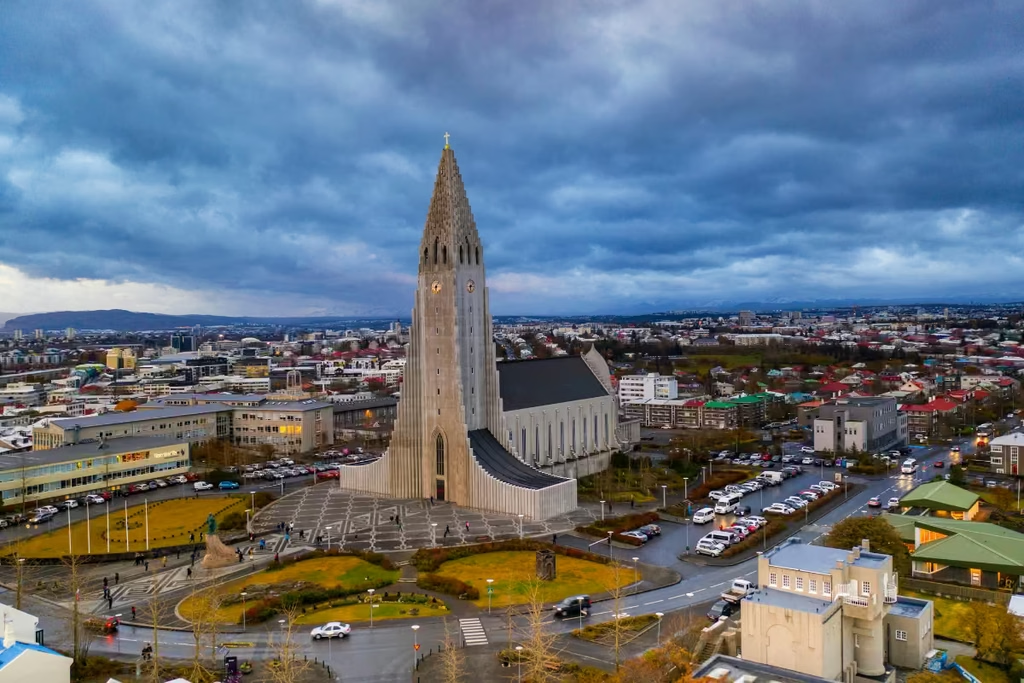
Reykjavík is the natural starting point for most Iceland travel destinations, and it’s a genuinely enjoyable base in its own right, with colorful rooftops, the striking Hallgrímskirkja church tower, and a harbor-front dining scene that’s grown considerably in recent years. The Sun Voyager sculpture along the waterfront and the Harpa concert hall’s glass facade are both easy, worthwhile stops, and the city’s geothermal pools (not just the famous Blue Lagoon nearby) offer a distinctly local way to relax after a day of sightseeing. Two days is enough to cover the highlights before heading out toward the rest of the country.
Golden Circle – Best for Iceland’s Famous Natural Wonders

The Golden Circle is Iceland’s most-visited route for good reason: a compact loop from Reykjavík taking in Þingvellir National Park (where the North American and Eurasian tectonic plates visibly pull apart), the Geysir geothermal area, and the powerful two-tiered Gullfoss waterfall. It’s entirely doable as a single day trip, making it the easiest of Iceland’s natural wonders to fit into even a short visit, though an overnight stop lets you add nearby attractions like the Kerið volcanic crater without rushing.
South Coast – Best for Waterfalls, Glaciers and Coastal Scenery

Iceland’s South Coast concentrates an outsized share of the country’s most photographed scenery into a single, easily driven stretch. Seljalandsfoss (walkable behind the falls) and Skógafoss (viewable from a clifftop platform above) anchor the waterfall lineup, while the Sólheimajökull glacier tongue offers accessible glacier hiking without a Highlands-level detour. It’s one of the best places to visit in Iceland for travelers with limited time who still want the country’s signature landscapes.
Jökulsárlón Glacier Lagoon – Best for Glacial Landscapes

Icebergs calved from the Breiðamerkurjökull glacier drift slowly across Jökulsárlón‘s dark water before washing up, wave-smoothed, on the black sand of nearby Diamond Beach. Boat tours navigate between the floating ice for a closer look, and the lagoon’s depth and color shift noticeably with the seasons and light. It’s consistently named among the most beautiful places in Iceland, and photos genuinely undersell the scale of the ice up close.
Vík – Best for Black-Sand Beaches and Dramatic Cliffs
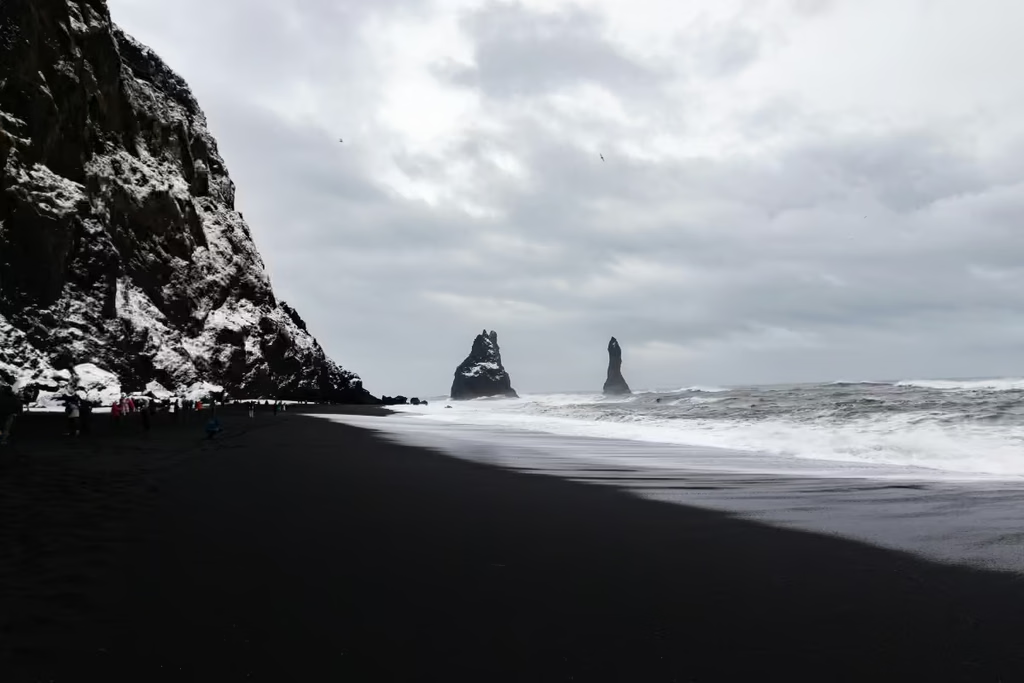
Vík í Mýrdal, Iceland’s southernmost village, sits beside Reynisfjara, a black-sand beach backed by dramatic basalt columns and framed by the offshore Reynisdrangar sea stacks. The waves here are genuinely dangerous; sneaker waves have caught visitors off guard, so this is a beach to admire rather than wade into, but the combination of black sand, columnar cliffs, and rugged coastline makes it one of the most striking spots on the entire South Coast.
Snæfellsnes Peninsula – Best for Diverse Landscapes and Scenic Drives
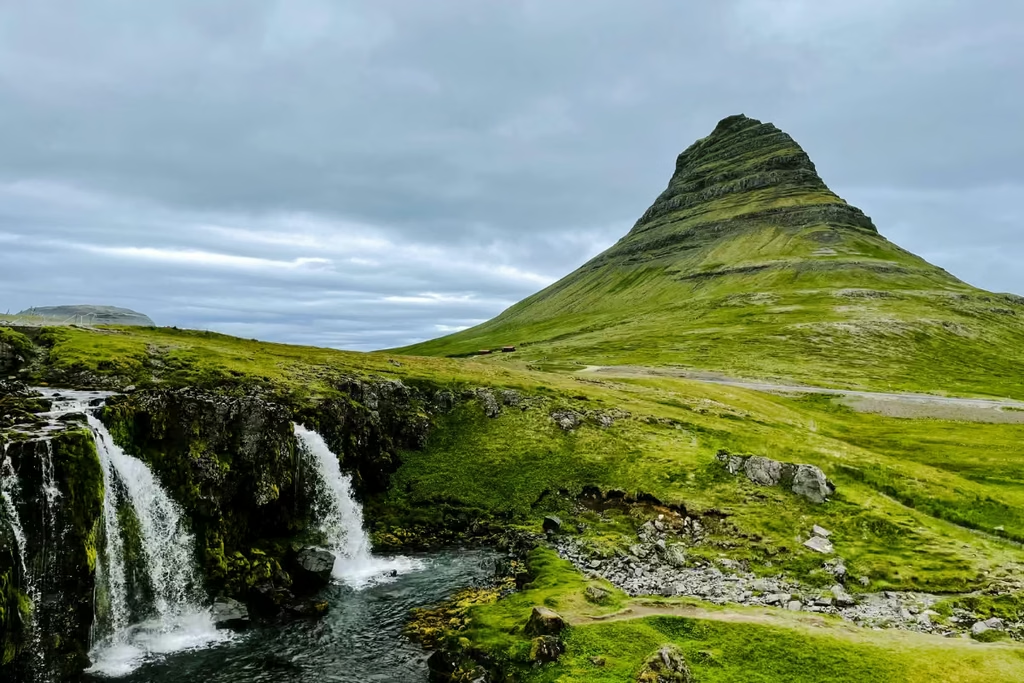
Snæfellsnes packs a remarkable range of Iceland’s landscapes into a single peninsula, often nicknamed “Iceland in Miniature.” The glacier-capped Snæfellsjökull volcano (said to have inspired Jules Verne’s Journey to the Center of the Earth) anchors the region, alongside black-sand beaches, dramatic basalt cliffs at Arnarstapi, and the photogenic Kirkjufell mountain near Grundarfjörður. It’s close enough to Reykjavík for a long day trip, though an overnight stop lets you cover the peninsula’s full scenic drive without rushing.
Westfjords – Best for Remote Landscapes and Untouched Nature
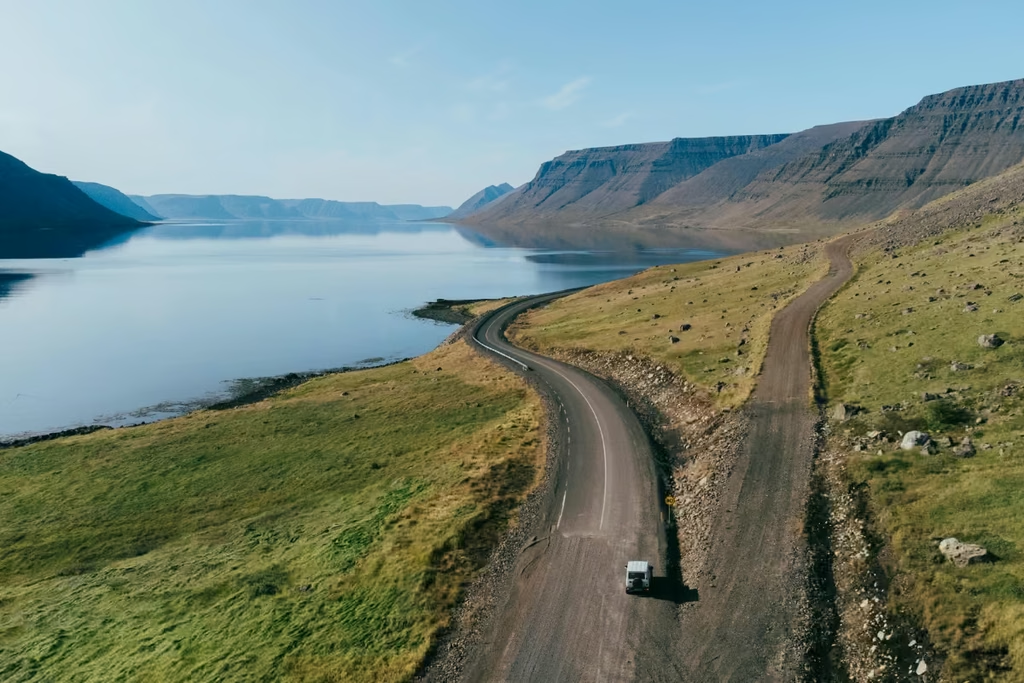
The Westfjords remain Iceland’s least-visited major region, and that’s precisely their appeal: dramatic fjords, remote hiking trails, and bird cliffs at Látrabjarg that host one of the largest puffin colonies in the country. Roads here are slower and less developed than the Ring Road, which keeps crowds thin even in peak summer. It’s a strong choice for travelers who’ve already covered Iceland’s more accessible highlights and want a genuinely off-the-beaten-path add-on.
Eastfjords – Best for Peaceful Coastal Scenery and Scenic Roads
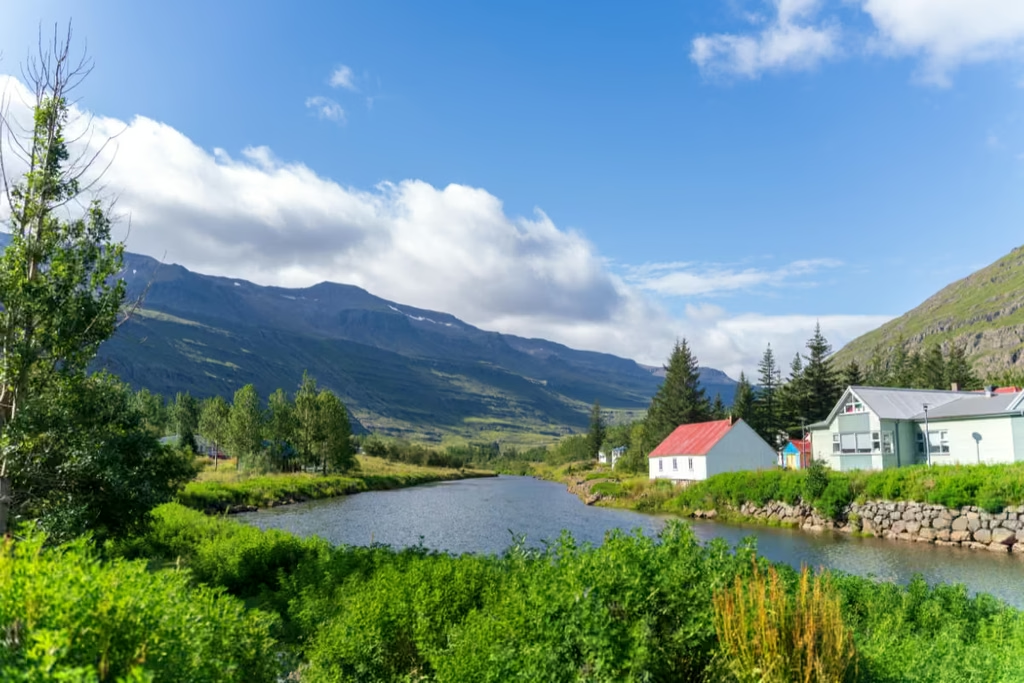
The Eastfjords offer a quieter, slower version of Iceland’s fjord scenery, with small fishing villages like Seyðisfjörður (known for its colorful main street and waterfall backdrop) tucked between steep, green-in-summer mountainsides. The coastal road winding through the region delivers consistent, uncrowded scenic views, making this stretch a favorite for travelers doing a full Ring Road circuit rather than a South Coast-only trip.
North Iceland – Best for Waterfalls, Volcanic Landscapes and Nature
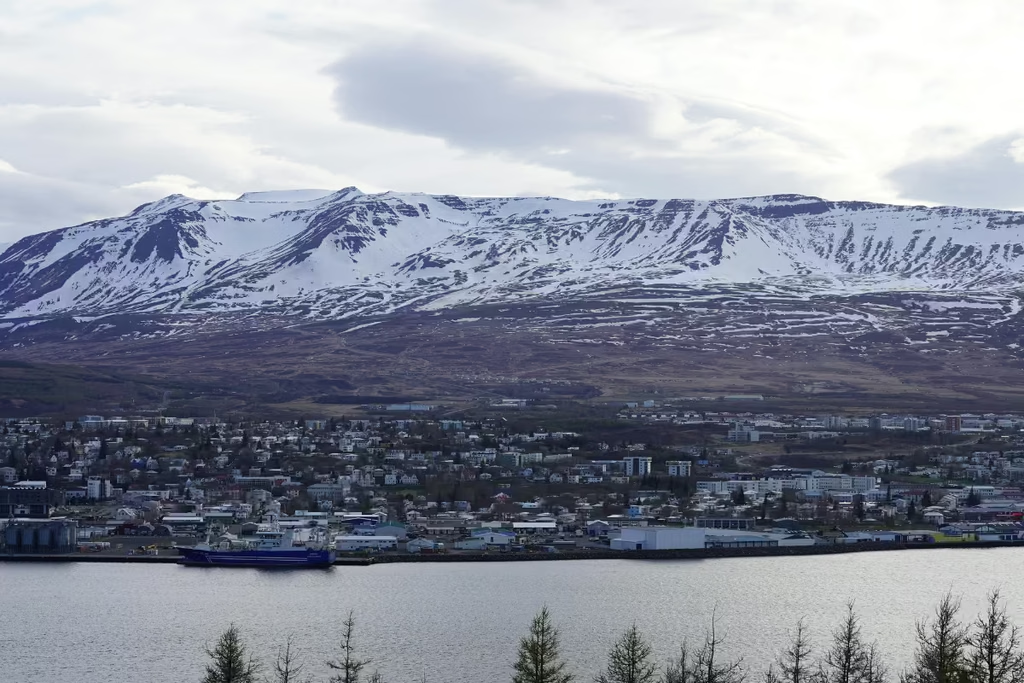
North Iceland centers on Akureyri, the country’s second-largest urban area, and fans out to volcanic and geothermal highlights including the Mývatn area’s lava fields and bubbling mud pools, plus the powerful Goðafoss waterfall. The region also offers some of Iceland’s best whale-watching, particularly out of Húsavík, and tends to see noticeably fewer visitors than the South Coast and Golden Circle despite comparably dramatic scenery.
Iceland Highlands – Best for Rugged Landscapes and Adventure

The Iceland Highlands hold some of the country’s most rugged and remote terrain, multicolored rhyolite mountains at Landmannalaugar, volcanic desert stretches, and hiking routes like the Laugavegur Trail that draw serious trekkers. Access is generally limited to summer months and requires a 4×4 vehicle for the unpaved F-roads and river crossings involved, making this the pick for travelers specifically after backcountry adventure rather than a paved-road itinerary.
Best Places to Visit in Iceland by Travel Style
Best Places to Visit in Iceland for Beaches
Vík’s Reynisfjara and the Snæfellsnes Peninsula’s black-sand coastline both stand out among Iceland’s beaches, prized more for dramatic scenery than swimming given the cold water and strong currents.
Best Places to Visit in Iceland for Couples
The Golden Circle’s geothermal stops and a stay near the Blue Lagoon make an easy, romantic short trip, with Jökulsárlón’s glacier lagoon offering one of Iceland’s most striking backdrops for a longer itinerary.
Best Places to Visit in Iceland for Families
Reykjavík’s museums and geothermal pools suit families well, and the South Coast’s accessible waterfalls give kids plenty of easy, walkable stops along the way.
Best Places to Visit in Iceland for History and Culture
Reykjavík and Þingvellir National Park (on the Golden Circle) anchor Iceland’s cultural and historical highlights; the latter also holds the site of the country’s original parliament, founded in 930 AD.
Best Places to Visit in Iceland for Nature
Jökulsárlón, Iceland’s volcanic landscapes, and the Iceland Highlands together cover the broadest range of the country’s natural scenery, from glaciers to geothermal fields to rugged backcountry.
Best Time to Visit the Best Places in Iceland
Summer (June–August) offers the mildest weather, nearly 24-hour daylight, and access to the Highlands’ F-roads, making it the easiest season for a full Ring Road trip. Winter (November–March) brings the northern lights and Iceland’s dramatic ice caves but shorter days and more limited road access, particularly in the Westfjords and Highlands. Shoulder seasons (April–May and September–October) offer a solid middle ground: fewer crowds than summer, milder conditions than deep winter, and a decent chance at aurora viewing in the fall.
How to Get Around the Best Places in Iceland
Renting a car is by far the most practical way to see Iceland’s attractions, with Route 1 (the Ring Road) circling the entire country and connecting most of the destinations in this guide. A standard vehicle covers the Golden Circle, South Coast, and Ring Road comfortably in summer, though a 4×4 is required for Highland F-roads and recommended for winter driving conditions. Guided day tours and multi-day bus tours are a solid alternative for travelers who’d rather not drive, particularly for winter northern lights trips or Highlands access.
How Many Days Do You Need to Visit Iceland?
One week is enough to cover the Golden Circle and South Coast as far as Jökulsárlón, giving a solid introduction to Iceland’s best-known sights. Ten to fourteen days allows a full Ring Road circuit, adding North Iceland, the Eastfjords, and time to explore Snæfellsnes without rushing. For a deeper trip that includes the Westfjords or Highlands trekking, plan for two to three weeks given the extra driving time these more remote regions require.
Best Places to Visit in Iceland FAQs
What is the best place to visit in Iceland for the first time?
Reykjavík combined with the Golden Circle and South Coast makes the best introduction for first-time visitors, covering Iceland’s most iconic natural wonders within a manageable driving distance.
What is the most beautiful place to visit in Iceland?
Jökulsárlón Glacier Lagoon is one of the most frequently cited beautiful places in Iceland, with the Snæfellsnes Peninsula and Vík’s black-sand cliffs close behind.
What are the best places to visit in Iceland for nature?
The Iceland Highlands and North Iceland’s volcanic areas offer the country’s most immersive nature experiences, while Jökulsárlón provides a more accessible glacial landscape.
What are the best places to visit in Iceland in summer?
Summer opens up the Iceland Highlands and Westfjords, both largely inaccessible in winter, making this the best season to combine a full Ring Road trip with backcountry hiking.
What are the best places to visit in Iceland in winter?
Reykjavík, the Golden Circle, and the South Coast remain the most reliably accessible in winter, and all three offer strong chances for northern lights viewing away from city light pollution.
Is 7 days enough to visit Iceland?
Seven days is enough to cover the Golden Circle and South Coast as far as Jökulsárlón comfortably, though it won’t allow time for a full Ring Road circuit or the more remote Westfjords and Highlands.
What is the best way to get around Iceland?
A rental car is the most flexible way to get around Iceland, with a standard vehicle sufficient for the Ring Road in summer and a 4×4 recommended for winter driving or Highland F-roads.