
Best Places to Visit in Mexico: 10 You’ll Love
Explore the best places to visit in Mexico with 10 must-see destinations, from beaches and historic cities to beautiful places and hidden gems.

Table of Contents
Mexico resists the postcard version of itself. Sure, there are the all-inclusive beach resorts, but that’s a fraction of a country that also holds ancient Mayan cities swallowed by jungle, colonial towns painted in every shade of a Crayola box, a capital with more museums than you could see in a month, and a northern desert peninsula where the Pacific and the Sea of Cortez practically collide. It’s one of the most geographically and culturally varied countries in the Americas, and that’s before you even get to the food.
This guide covers the best places to visit in Mexico by region, by travel style, and by season, so whether you’re after cenotes and beach clubs or colonial architecture and mezcal bars, you can put together a trip that actually reflects what you’re looking for.
Best Places to Visit in Mexico at a Glance
- Mexico City – Best for history, museums, and urban culture
- Yucatán Peninsula – Best for Mayan heritage and natural wonders
- Oaxaca – Best for culture, architecture, and traditional character
- Riviera Maya – Best for beaches, cenotes, and coastal scenery
- Baja California Sur – Best for dramatic coastlines and desert landscapes
- Chiapas – Best for waterfalls, canyons, and mountain landscapes
- Puerto Vallarta – Best for coastal scenery and relaxed city life
- Guanajuato – Best for colonial architecture and historic streets
- Copper Canyon – Best for dramatic mountain scenery
- Bacalar – Best for peaceful lakeside scenery and nature
Best Places to Visit in Mexico
Mexico City – Best for History, Museums and Urban Culture

Mexico City is enormous, layered, and endlessly rewarding if you give it the time it deserves. The Zócalo and its surrounding historic center sit atop the ruins of the Aztec capital Tenochtitlan, with the excavated Templo Mayor right in the middle of it. Beyond the center, neighborhoods like Roma and Condesa offer tree-lined streets full of cafés and art deco buildings, while Chapultepec Park holds one of the world’s great anthropology museums. Add day trips to the Teotihuacan pyramids just outside the city, and Mexico City easily fills four or five days without repeating itself.
Yucatán Peninsula – Best for Mayan Heritage and Natural Wonders
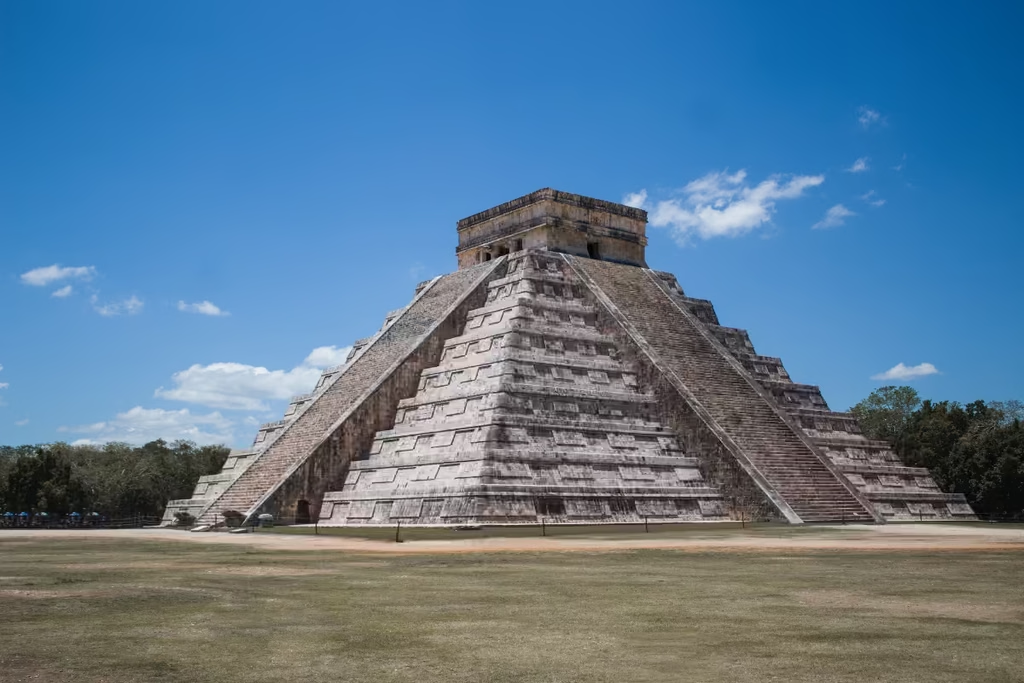
The Yucatán is where Mexico’s Mayan history is most visible and most accessible. Chichén Itzá, one of the New Seven Wonders of the World, draws the crowds, but Uxmal and Ek Balam offer similarly impressive ruins with a fraction of the visitors. The region is also riddled with cenotes, natural limestone sinkholes filled with startlingly clear freshwater, many open for swimming, and the colonial city of Mérida makes an excellent, walkable base for exploring both the ruins and the cenote-dotted countryside around it.
Oaxaca – Best for Culture, Architecture and Traditional Character

Oaxaca City might be Mexico’s most culturally rich destination outside the capital: a UNESCO-listed colonial center full of green cantera-stone buildings, one of the country’s best food scenes (mezcal and mole both trace their roots here), and a market culture that’s still deeply local. Just outside the city, the Hierve el Agua rock formations mimic petrified waterfalls, and nearby villages specialize in traditional crafts like black pottery and hand-woven textiles. Visit in late October or early November for Día de los Muertos, when Oaxaca hosts some of the country’s most elaborate celebrations.
Riviera Maya – Best for Beaches, Cenotes and Coastal Scenery

Stretching south from Cancún along the Caribbean coast, the Riviera Maya is Mexico’s premier beach destination, with white sand, turquoise water, and a well-developed strip of resorts and beach towns. Tulum leads for boho-chic beach clubs set against Mayan ruins perched right on the cliffside, while Playa del Carmen offers a livelier, more walkable town center. The whole stretch is riddled with cenotes and underground rivers, making it as good for adventure and diving as it is for straightforward beach time.
Baja California Sur – Best for Dramatic Coastlines and Desert Landscapes
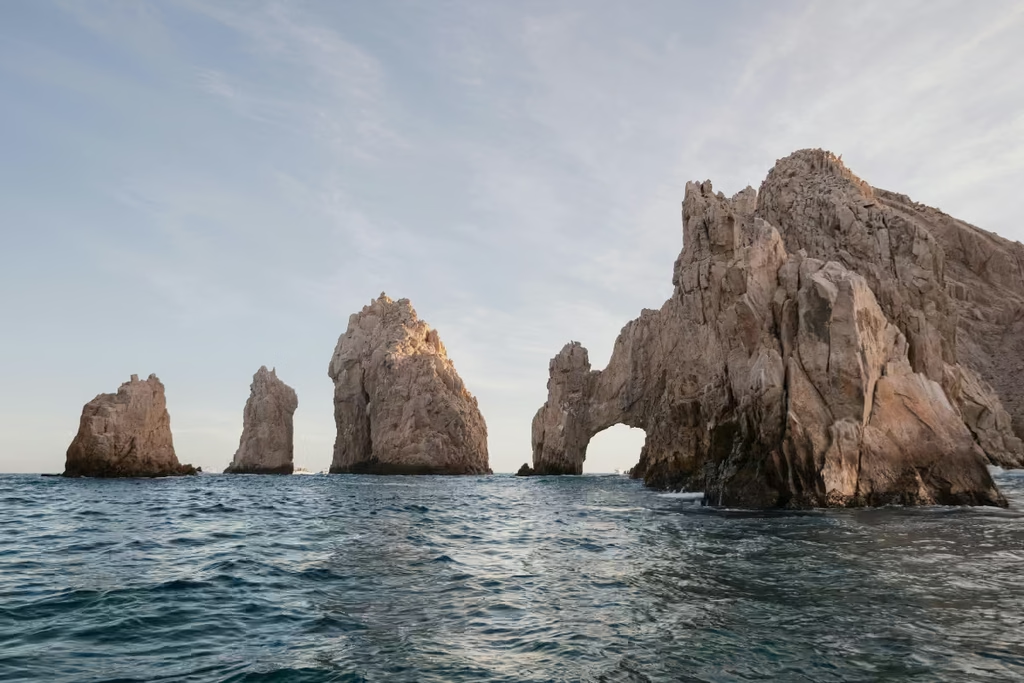
Baja California Sur delivers a version of Mexico that looks nothing like the jungle-and-ruins south: a cactus-studded desert meeting dramatic coastline, with the Pacific on one side and the calmer Sea of Cortez on the other. Los Cabos (Cabo San Lucas and San José del Cabo) anchors the resort scene, complete with the iconic El Arco rock formation, while the smaller town of Todos Santos offers a quieter, artsier alternative. Whale watching is a major draw here too; gray whales migrate through the surrounding waters from roughly December through April.
Chiapas – Best for Waterfalls, Canyons and Mountain Landscapes

Chiapas, tucked in Mexico‘s mountainous south near the Guatemalan border, feels worlds away from the beach resorts further north. Sumidero Canyon’s sheer, jungle-draped walls rise more than 3,000 feet above the Grijalva River, best seen on a boat tour that also turns up crocodiles and howler monkeys. Palenque’s Mayan ruins sit deep in the jungle here as well, and the colonial mountain town of San Cristóbal de las Casas makes an atmospheric, cool-climate base for exploring both.
Puerto Vallarta – Best for Coastal Scenery and Relaxed City Life

Puerto Vallarta strikes a comfortable middle ground between resort convenience and genuine small-city charm. The cobblestoned Zona Romántica keeps a walkable, old-town feel with its own beaches and a lively restaurant scene, while the Malecón boardwalk strings together sculptures and sunset views along the Bahía de Banderas.
Guanajuato – Best for Colonial Architecture and Historic Streets

Guanajuato packs its colonial architecture into a maze of narrow, colorful alleyways and underground tunnels (originally built for flood control, now used as roads), all set in a valley that keeps the whole city feeling tucked away and self-contained. The Callejón del Beso (“Alley of the Kiss”) and the ornate Teatro Juárez are the postcard stops, but the city’s real charm is in wandering and climbing to the Pípila monument for a rooftop view over the whole colorful sprawl. It’s also home to a lively university population, which keeps the plazas and cafés buzzing well into the evening.
Copper Canyon – Best for Dramatic Mountain Scenery

Copper Canyon (Barrancas del Cobre), in Mexico’s northern Chihuahua state, is actually a network of canyons larger and, in parts, deeper than the Grand Canyon. The best way to see it is aboard the Chepe Express or Chepe Regional train, which winds through more than 80 tunnels and dozens of bridges as it climbs from desert lowlands into pine-forested highlands. It’s remote and less visited than Mexico’s beach and colonial-city circuits, which is exactly the appeal for travelers chasing dramatic scenery without the crowds.
Bacalar – Best for Peaceful Lakeside Scenery and Nature
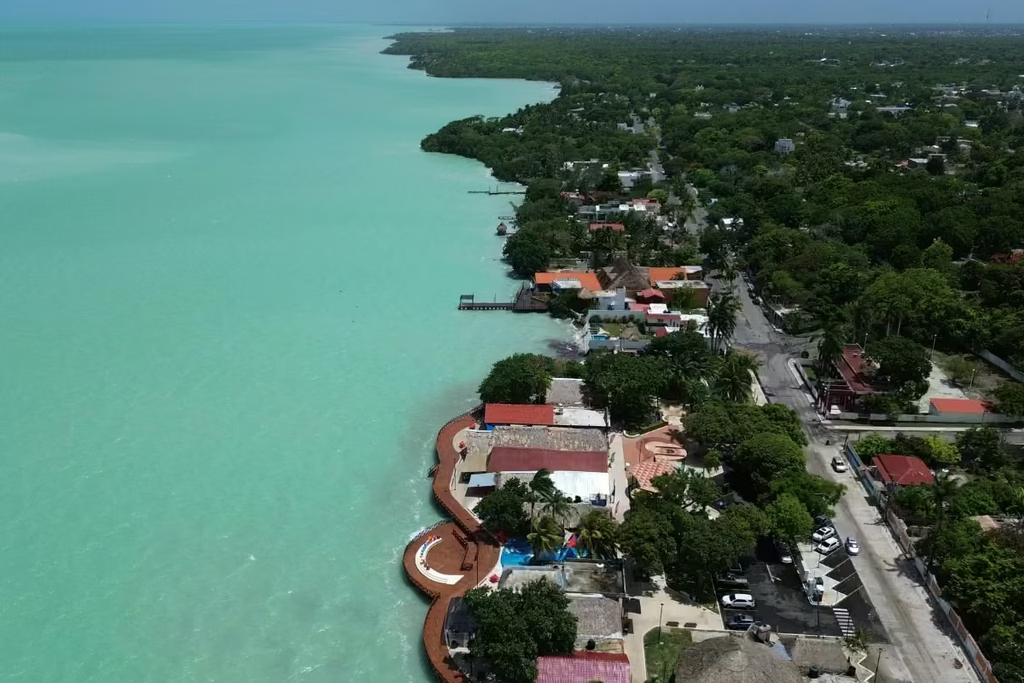
Bacalar’s Laguna de los Siete Colores lives up to its name, with seven distinct shades of blue visible across a single lake, caused by varying depths and a limestone bed. It’s a far quieter alternative to the busier Riviera Maya beach towns, with kayaking, paddleboarding, and boat tours as the main activities rather than resort nightlife. The town itself remains small and low-key, making it a good stop for travelers who want a slower pace after the Yucatán’s more heavily touristed sites.
Best Places to Visit in Mexico by Travel Style
Best Places to Visit in Mexico for Beaches
The Riviera Maya leads for classic Caribbean beach scenery and cenote access, while Baja California Sur and Puerto Vallarta offer strong Pacific-coast alternatives with a different, more desert-backed landscape.
Best Places to Visit in Mexico for Couples
Tulum’s beach-club scene and Bacalar’s quiet lagoon both suit a romantic pace, with Guanajuato’s colorful, walkable streets making an excellent alternative for a colonial-city romance.
Best Places to Visit in Mexico for Families
Riviera Maya resorts are built with family infrastructure in mind, and Mexico City’s museums and Chapultepec Park give families plenty to do beyond the beach.
Best Places to Visit in Mexico for History and Culture
Mexico City and Oaxaca anchor the country’s history and culture, with the Yucatán Peninsula and Chiapas adding deep Mayan archaeological sites into the mix.
Best Places to Visit in Mexico for Nature
Copper Canyon and Chiapas both deliver dramatic canyon and mountain scenery, while the Yucatán’s cenotes and Baja’s whale-watching season round out the country’s natural highlights.
Best Time to Visit the Best Places in Mexico
The dry season, roughly November through April, is the best overall window across most of the country: mild temperatures, minimal rain, and (in Baja) prime whale-watching season. May through October brings hotter, more humid conditions in the Yucatán and Riviera Maya, along with hurricane season risk along the Caribbean coast from June through November. Highland destinations like Mexico City, Oaxaca, and Guanajuato stay comfortable nearly year-round thanks to their elevation, making them solid picks even outside the peak dry season.
How to Get Around the Best Places in Mexico
Domestic flights are the most efficient way to cover Mexico’s geographic spread, connecting Mexico City, Cancún, and Los Cabos with frequent, relatively affordable service. Within regions such as the Yucatán Peninsula or the colonial cities of central Mexico, for instance, long-distance buses run on comfortable, modern coaches and are a genuinely good option, while a rental car offers more flexibility for reaching cenotes, smaller villages, or Copper Canyon’s more remote stretches. Renting a car in Mexico City itself is best avoided; the metro, ride-hailing apps, and walking cover the capital far more easily.
How Many Days Do You Need to Visit Mexico?
Two weeks lets you comfortably combine Mexico City, one colonial city like Oaxaca, and a stretch of Yucatán or Riviera Maya beach time. If time is limited, a week is enough to focus on one region; the Riviera Maya and Yucatán ruins pair especially well together in that timeframe. For a deeper trip covering Baja California, Chiapas, or Copper Canyon as well, plan for three weeks or more given the distances between regions.
Best Places to Visit in Mexico FAQs
What is the best place to visit in Mexico for the first time?
Mexico City is the best starting point for first-time visitors, offering deep history and culture along with easy flight connections to the rest of the country’s regions.
What is the most beautiful place to visit in Mexico?
Bacalar’s seven-colored lagoon and Chiapas’s Sumidero Canyon are both frequently named among Mexico’s most beautiful spots, with Copper Canyon’s dramatic scale close behind.
What are the best places to visit in Mexico for beaches?
The Riviera Maya is Mexico’s top beach destination, with Baja California Sur and Puerto Vallarta offering strong Pacific-coast alternatives.
How many days do you need to visit Mexico?
Plan for at least seven days to cover one region well, such as the Yucatán Peninsula or Riviera Maya, and two weeks or more if you want to combine Mexico City, a colonial city, and the coast.